
The science behind every ritual
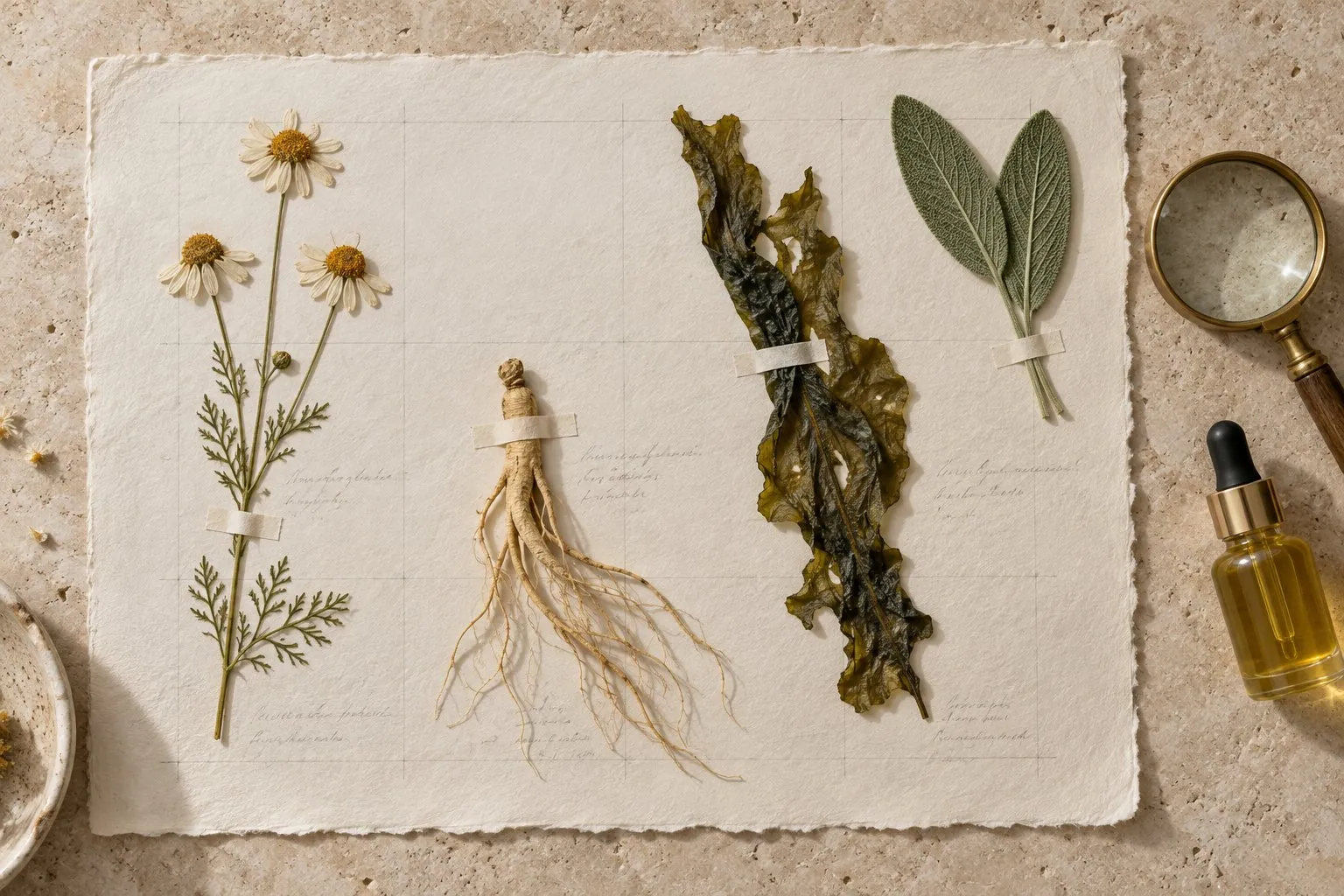
Step 1
Measure
Stress indicators taken from sensor data: skin conductance, muscle activity and pulse.
Step 2
Match
Those indicators are matched against a botanical knowledge base built from traditional herbal practice.
Step 3
Check
Candidates are filtered through the European ingredient compliance database, so nothing unusable survives.
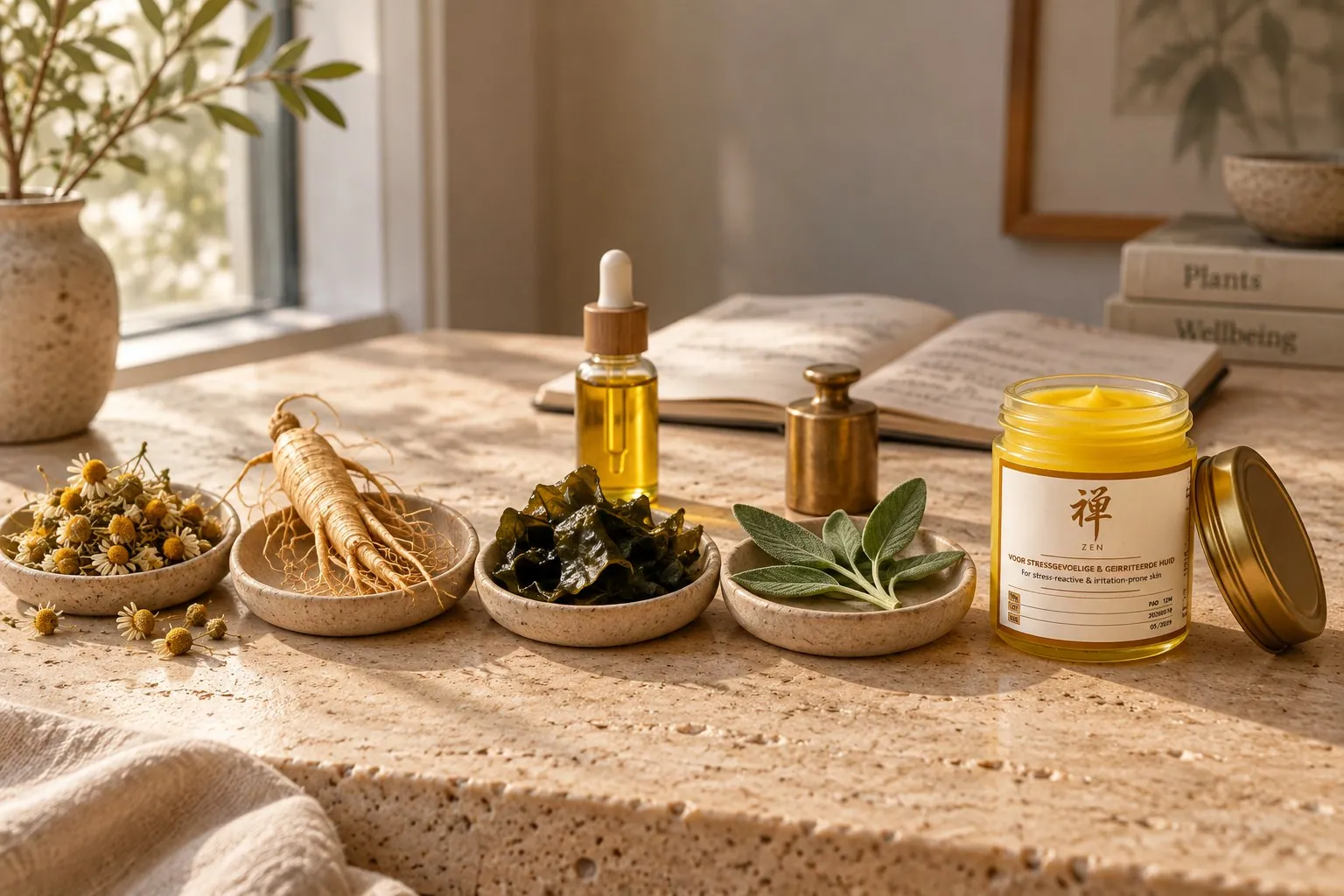
Zen Herbal Balm
Your skin feels stress before you do
Why stress shows on the skin
Sustained stress keeps the body's stress system, the HPA axis, active for longer. Among many other effects, that alters the skin's barrier and how readily it reacts, which is why stressed skin often behaves like sensitive skin.
We did not set out to make skincare. We set out to measure strain, and the measurement pointed at the skin.
What the research says
In a study of students during exam periods, the skin's protective barrier recovered more slowly under psychological stress than during a calm period (Garg and colleagues, Archives of Dermatology, 2001).How we designed the formulation
- 1
Measure
Stress indicators taken from sensor data: skin conductance, muscle activity and pulse.
- 2
Match
Those indicators are matched against a botanical knowledge base built from traditional herbal practice.
- 3
Check
Candidates are filtered through the European ingredient compliance database, so nothing unusable survives.
- 4
Cross-read
What remains is checked against published pharmacological literature before it goes near a mixing vessel.
- 5
Measure again
The result is tested on skin with the same sensing we started from. The loop closes.
The method is described in our paper “A Three-Step AI-Driven Formulation Methodology for Stress-Responsive Herbal Skincare” (AIMindWorks B.V., 2026).
How the balm is classified
Zen Herbal Balm is a cosmetic: it is made to comfort and care for skin that looks stressed, dry or easily irritated. It is notified under European cosmetic regulation and covered by a safety assessment. It is not a medicine and does not diagnose, treat, cure or prevent any skin condition.
RecoveryPod
Heat, music and a reading before and after
Infrared heat
Infrared light warms the body directly, so a session is relaxing at a lower temperature than a classic sauna.
What the research says
Regular sauna bathing is associated with lower perceived stress and a better sense of wellbeing.Slow music
Four movements at 60 to 80 beats per minute, close to a calm resting heart rate.
What the research says
A large review of clinical trials found music is associated with meaningful reductions in physiological arousal and perceived stress.Optional oxygen
Oxygen-enriched air at normal pressure, for guests who would rather skip the heat.
Why we offer it
It keeps the session open to everyone: the same quiet, the same music and the same two readings, without the warmth.Mindful Cards
Small, repeated moments build a mindset
The cards are made for building a more positive mindset: a prompt to pause, breathe and stay present, picked up often rather than read once.
Short practices like noticing what went well, feeling grateful or taking a mindful pause are among the most studied everyday habits in positive psychology.
What the research says
In a well-known study, people who regularly wrote down things they were grateful for reported a more positive outlook than people who wrote about hassles (Emmons and McCullough, Journal of Personality and Social Psychology, 2003). What makes the difference is repetition, which is why the cards are made to be picked up often.Prompts for everyday wellbeing, not therapy or a substitute for professional support.
Sensing
How we measure recovery
The same sensing sits behind the recovery pod. A short reading before a session and another afterwards, compared against your own baseline rather than a population average.
Three indicators come out of it: stress, which is how much load the body is carrying; fatigue, which is how much is left in reserve; and concentration, which is how available and steady attention is.
They are reported as index points out of a hundred. Low is one to forty, medium is forty-one to eighty, and high is eighty-one to a hundred, so landing in the high band means something.
Indicators, not measurements, and never a diagnosis.
Illustration: one reading against a personal baseline