
Time in the cabin. A change you can see.
What it is
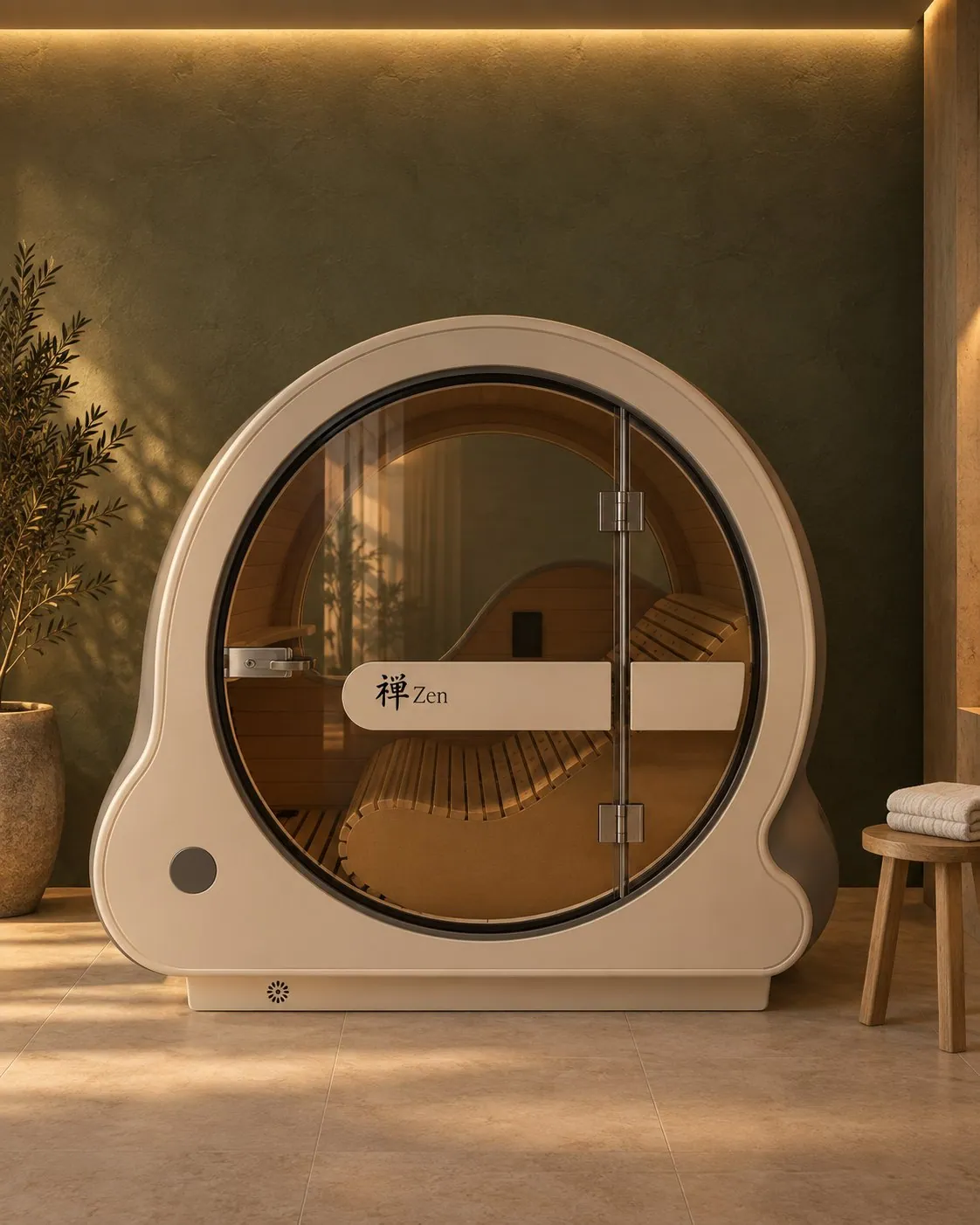
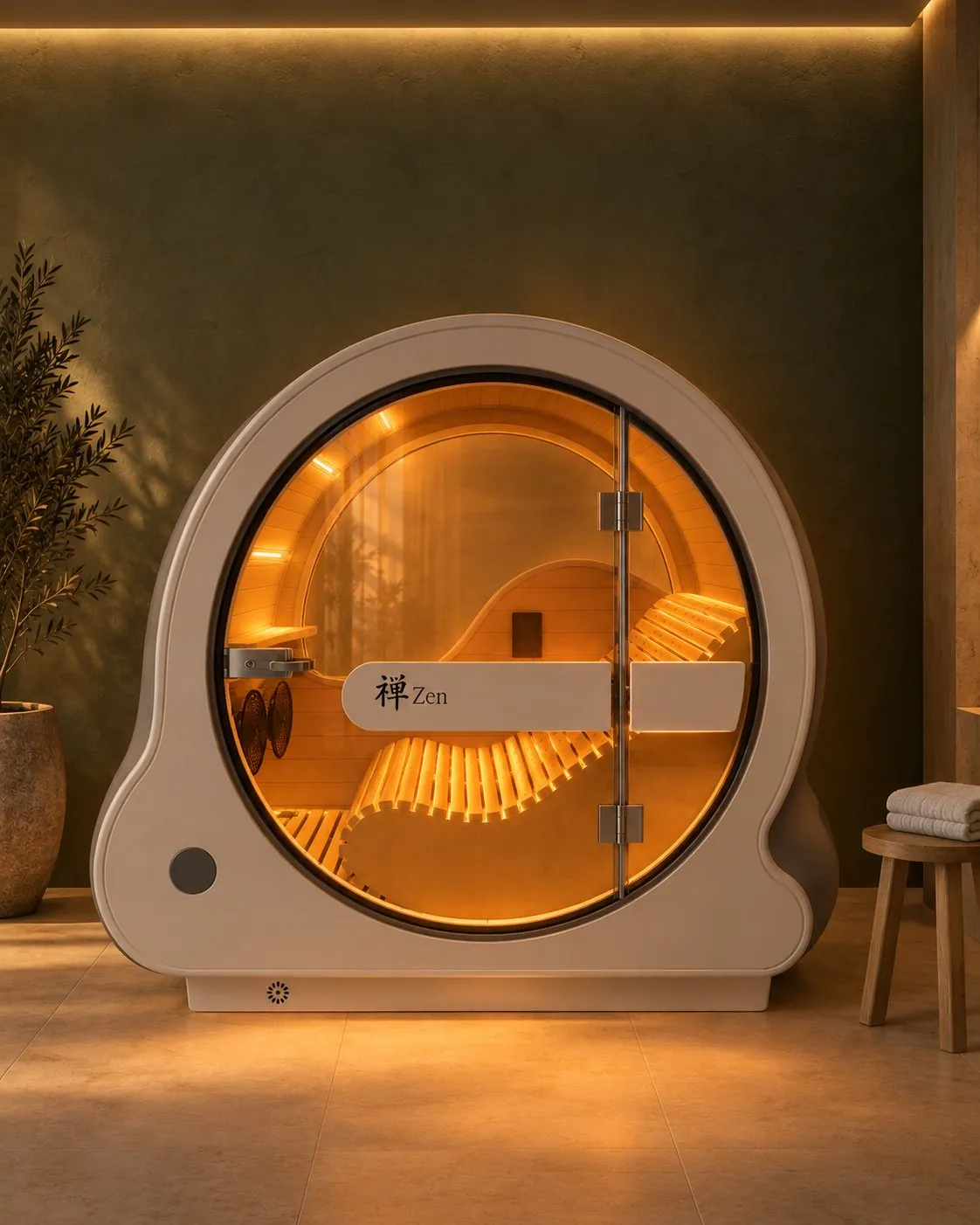
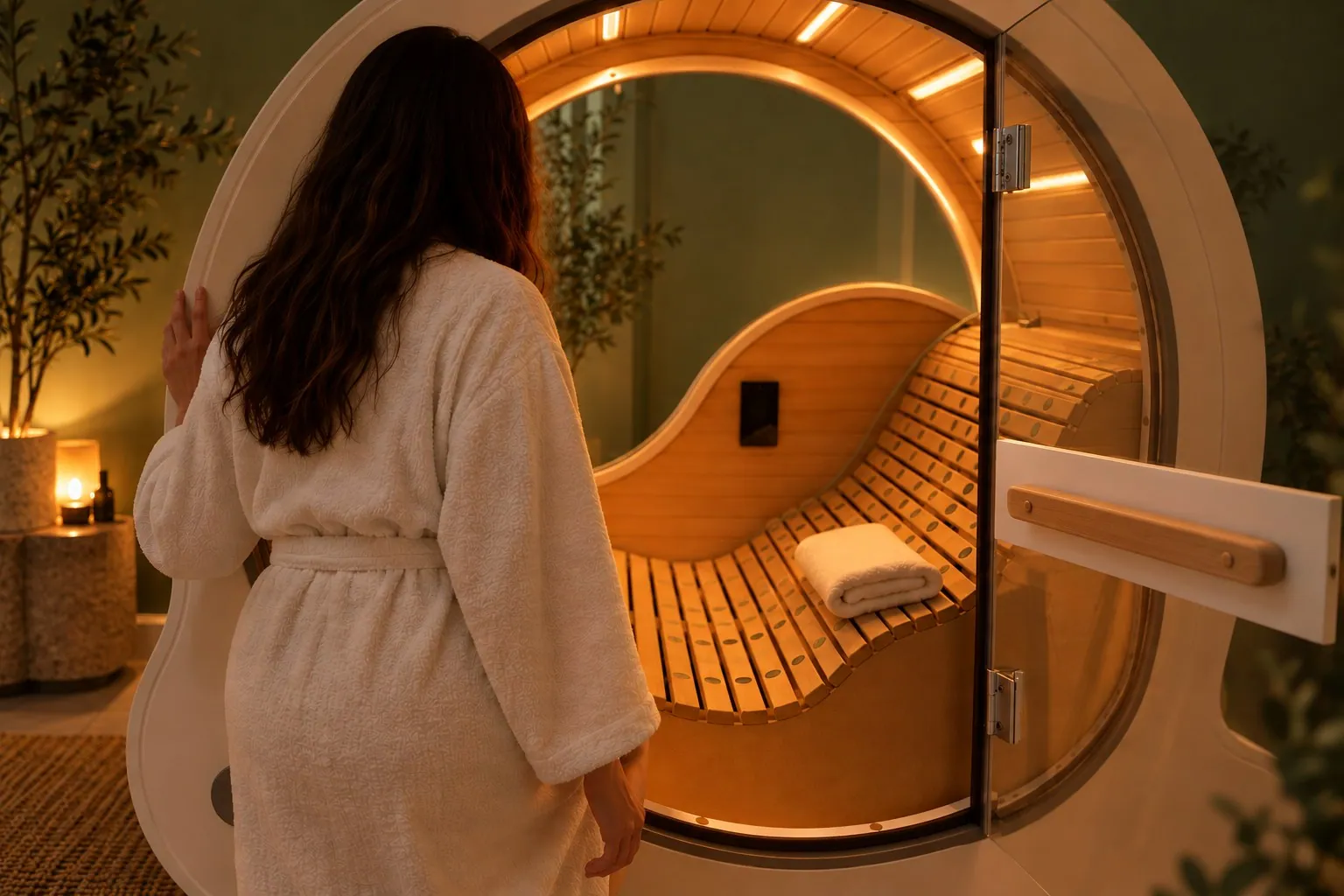
A single-person infrared cabin. You sit or lie back, fully clothed or in a robe, while the cabin warms gently around you and a calm music programme plays.
The session is set up the way you like it. Tell us how warm you want it, which colour of light you find restful, and what you would like to hear: we have our own programmes for the cabin, and if you prefer something of your own we will play that instead.
Nothing to operate once you are inside. The temperature panel is within reach, you can stop at any moment, and someone is within earshot the whole time.
A wellbeing experience, not medical care.
What is inside
Infrared heat
45 to 60°C
A traditional sauna heats the air around you. An infrared cabin is different: gentle infrared light warms your body directly, so the session is deeply relaxing at a lower, more comfortable temperature than a classic sauna.
As you warm, your heart rate rises a little and your blood vessels widen. It is the same everyday response you would get from a brisk walk on a warm day.
Meditation music
60 to 80 beats per minute
Soft, slow instrumental music, with pink and white noise available if you prefer them. The tempo sits close to a calm resting heart rate, which can gently invite your own breathing to slow along with it. You are welcome to bring your own listening instead.
The music is arranged in four movements, so the session has a shape: it settles you, holds you there, and brings you back.
Ambient-pressure oxygen
Optional
Air with a higher oxygen concentration, delivered at normal atmospheric pressure through a soft nasal cannula that is fresh, sealed and used only by you. There is no pressurised chamber and this is not a hyperbaric system.
It is offered as an alternative for guests who would rather not use the heat, and their session works just as well.
What we measure
Example session reading
Before and afterIndex points out of 100
How much load the body is carrying. Lower is the good direction.
How much is left in reserve. Lower is the good direction.
How available and steady attention is. Higher is the good direction.
- Low
- 1 to 40
- Medium
- 41 to 80
- High
- 81 to 100
How to read it
The numbers are index points out of a hundred, not percentages, so what matters is the direction and size of the move between your two readings.
No number is read on its own. Low stress with high fatigue is depletion, not calm, and the heat itself keeps your heart rate up for a while, so we always cool down before the second reading.
Bodies differ, and so do days. Whatever your two readings show, we go through them with you and put them in the context of how your day has been.
These are indicators, not measurements, and never a diagnosis. The effects of our pod are under pilot research.
Our first pod is in Eindhoven
It is running as a research pilot with the university, and it is not on an online booking system yet. Send us an email and we will tell you how a session works and when the pod is free.